



MATT SUTTON
A lion and a house cat face each other across dark, empty ground
CX leader, creative builder, people focused.

Building systems and people that deliver white‑glove experiences

The person behind the work

Front-line experience.
Operations accomplishments.
Builder mindset.

Matt Sutton smiling, in a light blue shirt and navy tieMATT SUTTON SOUTHERN CALIFORNIA

I’m Matt Sutton, a customer experience leader who builds support systems, strengthens them with AI, and backs them with great people and a strong service culture.

For 15+ years I’ve supported global brands including Netflix, Breville, and Coinbase, moving from the front lines to supervising teams.

I helped a small team deliver a full Salesforce implementation, and I cut a week-long email backlog down to 6–12 hour response times while absorbing all social media inquiries and launching a live chat channel.

What I care about most is the space between customers and the product: finding where people get stuck and fixing it with better workflows, clearer documentation, and smarter tools. I build AI-enabled tools for CX teams, and you’ll find several of them below.

I have a restless mind,
and my work is where I put it to good use.
Experience shaped at
The tools behind the work
  • Salesforce
  • Figma
  • Claude Code
  • Codex
  • WordPress
  • Adobe Suite
  • Microsoft Office
  • Hootsuite
  • Talkwalker
  • Looker
  • Tableau
  • Windows
  • Linux
  • macOS / OS X
  • Jira
  • GitHub
  • Google Workspace
Selected work

Built out of curiosity.Practical ideas, made tangible.

Explore GitHub ↗
✳ ExcelifyWORKSPACE / 01
From complexity to clarity.Make it useful ↗

Excelify

↗Direct
✳Expressive
≈Supportive
⊞Analytical

Personality Matrix

Discord Clean CSV Exporter

Notes & explorations

Things worth thinking about.

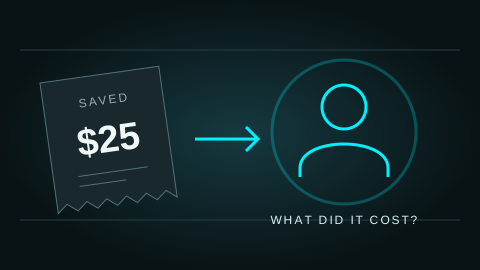
A small saved expense beside a larger customer relationship: the hidden cost of service frictionSaving the Refund. Losing the Customer.

A refund denied. A credit avoided. A call wrapped up quickly. On a dashboard, those can look like wins. But what happens if the customer calls three more times, escalates the issue, and never buys from you again?

The expense you avoided is easy to count. The relationship you lost is harder to see.

That gap is where customer service can become a false economy. When we judge support mainly by how little it spends, we can reward decisions that make the business more expensive to run and harder to trust.

A cheaper interaction is only a saving if it doesn’t create a more expensive problem.

Count the relationship, not just the refund

Customer lifetime value asks what a relationship is likely to contribute over time, after relevant costs. It gives service leaders a broader question: what does this decision do to future margin, repeat business, and the cost of keeping that customer?

Consider a deliberately simple example. A team denies a $25 goodwill credit. The dispute then creates three additional contacts costing $9 each. That is $27 in extra handling before anyone considers escalation time or lost future purchases.

These are illustrative numbers, not research findings. The point is to count the whole outcome. Granting every request would also be expensive. The useful comparison is between the expected costs and benefits of each response.

Customers shouldn’t have to manage your process

In their 2010 Harvard Business Review article, Matthew Dixon, Karen Freeman, and Nicholas Toman reported research involving more than 75,000 customers. Their central finding emphasized making problems easy to resolve over elaborate attempts to exceed expectations. [1]

In practice, effort often looks ordinary: repeating an explanation, finding the same receipt twice, switching channels, or waiting for someone with permission to act. Each step asks the customer to absorb an internal coordination problem.

Start with the handoffs. Carry the history forward. Give the next person the evidence already collected. If another team must investigate, name an owner and explain when the customer will hear back.

A polite conversation matters. A completed resolution matters more than a polished explanation of why nothing can happen yet.

Protect the business without making suspicion the default

Fraud, account security, and policy abuse are real operational concerns. Controls should match the risk and the decision. A sensitive account change may require verification; a routine delivery update should not inherit that same obstacle course.

Use clear eligibility rules, proportionate evidence requirements, documented exceptions, and a review path when a decision appears wrong. Audit the outcomes, including legitimate requests caught by the controls. A first-time customer still deserves a fair process.

Return-policy research supports looking beyond the immediate expense. A 2016 meta-analysis of 21 papers found that more lenient policies increased purchasing more than returns overall, with different policy dimensions affecting behavior differently. [2] That does not guarantee higher profit for every retailer. Shipping, product margins, resale value, and abuse still belong in the calculation. It does challenge the assumption that making a return difficult is automatically good business.

Give agents authority that matches their responsibility

Asking someone to own a customer’s problem while withholding the tools to solve it creates predictable frustration on both sides.

Define what agents can approve, which evidence they need, and when to escalate. Pair that authority with coaching and review. A reasonable credit limit, a clear replacement policy, or direct access to the right specialist can remove an entire cycle of waiting.

Keep handle time as a capacity signal, but read it alongside resolution quality. A short call that produces another call has not necessarily made the operation more efficient.

Measure what happens after the ticket closes

TrackAsk
Cost per resolved issueWhat did the entire case cost, including repeat contacts and escalations?
Resolution and reopensDid the fix hold after the interaction ended?
Customer effortHow much work did the customer have to do?
Retention and contribution marginDid comparable customers keep buying, and at what margin after service costs?
Fraud and mistaken denialsAre controls catching abuse while allowing legitimate requests through?

No single score settles the question. Survey responses can show friction; observed customer behavior helps establish whether the change is paying off.

Start with one policy that creates callbacks

Choose a recurring issue where the process is doing too much of the damage. Document the current journey, remove one unnecessary approval or repeated request, and test the change with a comparable group.

Measure the full cost of resolution, concessions, confirmed abuse, and subsequent customer behavior. Allow enough time for repeat purchases or renewal decisions to occur. Expand what improves the outcome; revise what only moves the cost somewhere else.

The real return on customer service is in problems solved, avoidable work removed, and relationships worth keeping. Build the operation to make those outcomes visible.

A headset connected to glowing chat and email symbols: Phone or chat? Less hold. More help.Hang Up on Hold? The Truth About Phone Support vs. Digital Channels

For decades, the ringing telephone was the universal symbol of customer service. Today, many companies continue to pour massive budgets into maintaining expansive call centers, operating under the assumption that consumers fundamentally require phone support.

But in an era of rapid digital communication, AI chatbots, and immediate gratification, is a heavy reliance on phone-based service still justified?

The answer is more complicated than replacing calls with chat. Customers’ preferences change with the task, the urgency, and the quality of the experience. And outsourcing is a separate decision: a Business Process Outsourcing (BPO) partner can operate voice, chat, email, or a combination of all three.

The phone support paradox

Many businesses maintain large call centers because they believe voice communication is the gold standard for customer care. Yet a familiar channel can still deliver a frustrating experience when customers face long queues, repetitive verification, or repeated transfers.

  • Preferences differ. Age, accessibility needs, digital confidence, and the nature of the problem all matter. Removing phone support can create a barrier for customers who rely on it.
  • Patience is limited. A phone queue prevents customers from getting on with their day. Callbacks and realistic wait estimates can reduce that friction.
  • Historical satisfaction tells a cautionary story. A 2013 eDigitalResearch survey of 2,000 consumers, reported by Econsultancy, found satisfaction of 73% for live chat, 61% for email, and 44% for phone. These are historical survey results, not current industry-wide benchmarks. [1]

That does not establish that phone support is obsolete. It shows why channel availability and channel quality need to be evaluated separately.

Do consumers care how they connect?

Consumers care about both the route and the result. A quick answer matters, but so does reaching someone they trust without disrupting their day.

  • Digital convenience. Live chat keeps support close to the website or application where a problem occurs. Messaging can let customers continue other tasks while a conversation progresses.
  • Human access still matters. In its contact center trends analysis for 2025, Qualtrics reported that 61% of consumers preferred human channels for completing tasks, rising to 74% for resolving an issue or getting technical support. Human support can include a live agent in chat; it does not mean phone alone. [2]
  • Context changes the choice. A delivery update, a multi-day billing dispute, and an urgent account-access problem do not necessarily call for the same channel.

Live chat and AI chatbots should also be distinguished. A preference for convenient digital communication is not automatically a preference for automated support.

Outsourced call centers vs. digital-only operations

When companies compare outsourced call centers with text-based operations, they are weighing two decisions at once: who provides support and which channels customers can use. Both deserve their own evaluation.

The case for outsourced call centers

  • Scalability and coverage. A BPO can provide staffing flexibility for seasonal spikes and extended hours, depending on the contract, training, and capacity available.
  • Handling complexity. A real-time voice conversation can help untangle ambiguous, urgent, or emotional situations, especially when an agent has the authority and tools to resolve them.
  • The drawbacks. Brand tone, empathy, and product knowledge need active oversight. Complex issues may still require internal escalation, so the handoff matters as much as the initial response.

The case for live chat and email

  • Cost efficiency. Chat can reduce handling costs for suitable queries, but savings depend on issue complexity, staffing, tooling, and resolution quality. A cheaper contact is not a saving if it generates repeat contacts.
  • Concurrent conversations. Chat agents can manage more than one conversation, but capacity should reflect cognitive load and complexity. Higher concurrency can also mean slower replies and less attention per customer.
  • Documentation. Email creates a written trail that can be retained and searched under the organization’s policies, making it useful for evidence, attachments, and multi-step technical work.
  • The drawbacks. Chat can become another queue, and email can feel too slow without clear expectations. Workforce pressure is not limited to one channel: Salesforce’s 2024 State of Service findings reported that 77% of agents had experienced increased workloads. [3]

What consumers actually think

An outsourced voice operation is not inherently better than a digital-only team. Nor does moving everything to chat automatically improve the experience. Customers need a channel that fits their situation and a team equipped to finish the job.

Customer needUseful starting pointWhat makes it work
Quick questions, order updates, simple fixesLive chat or messagingPrompt answers and an easy route to a person
Attachments, evidence, multi-step investigationsEmail or a tracked support caseA clear record, ownership, and response expectations
Urgent, emotional, or hard-to-explain problemsPhone or a scheduled callbackEmpathy, authority, and continuity after the call

This is a practical guide, not a universal ranking. Accessibility and individual preference should remain part of the decision.

The stronger strategy is to connect the channels: preserve the conversation history, transfer context with the customer, and make escalation straightforward.

The goal is less hold, less repetition, and more resolution—however the customer reaches you.

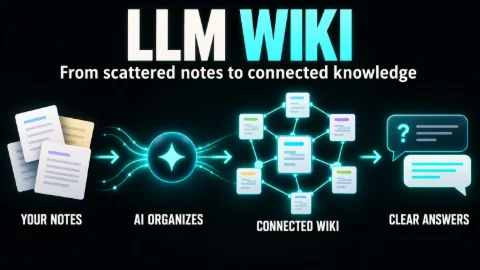
Connected notes surrounding an AI knowledge hubWhy Your Notes App Is About to Become Your Smartest Colleague

You read an incredible article, highlight the best parts, and save it. You collect PDFs, clip web pages, and build a sprawling library of research.

Then you barely look at it again.

Finding things becomes another task. You have to remember the right keyword or which folder holds that one useful idea. What if you could ask your notes a question instead?

From storage to a thinking partner

The “LLM OS” analogy offers a useful way to picture this shift: an AI model becomes the interface between you, your information, and your tools.

Computer componentAI equivalentWhat it means
ProcessorLanguage modelInterprets requests and synthesizes information
Working memoryContext windowHolds the information available during a task
StorageFiles and notesPreserves your research beyond a conversation
PeripheralsConnected toolsAdds capabilities such as browsing and calculation

The analogy has limits. An AI can misunderstand a document, and it only accesses files and tools you make available. But it suggests a different relationship with your archive: conversation alongside search.

The LLM-Wiki approach

Andrej Karpathy describes a related pattern called LLM Wiki: an AI agent maintains an interconnected knowledge base built from your source material.

The workflow has three parts:

  1. Preserve the originals. Keep articles, PDFs, and notes as reference material.
  2. Build the wiki. Ask the agent to summarize sources and connect related ideas.
  3. Maintain the connections. Update topic pages and flag contradictions as new material arrives.

The setup matters. Your notes app won’t start doing this automatically, and its summaries still need review. [1]

Two ways to put it to work

Find recurring ideas

Ask what themes appear across your customer experience notes. Review the answer against the original material, then save the useful connections.

Compare research

Bring together several papers or reports. Ask where they agree, where they differ, and which questions remain unresolved.

Start small

Create two folders: Raw Inbox and Wiki Index. Add a few documents to the inbox, then give your AI this instruction:

Read these sources, identify the main themes, and draft a linked index. Cite the source behind each important claim. Flag uncertainty and leave the original files unchanged.

Review the result before saving it. Add documents gradually and request updates as you go.

The opportunity is simple: spend less time filing information and more time using it.

A pyramid intersected by geometric construction linesThe Pyramids’ Hidden Math and Poured Stone: A Brilliant Illusion

Watch the documentary on YouTube ↗

Have you ever watched a documentary that makes you feel like you’ve unlocked a cosmic cheat code?

Great Pyramid K2019 offers that experience: ancient stoneworking, dramatic geometry, and the possibility that familiar history has missed something extraordinary.

It makes for an entertaining “what if.” It also raises a useful question: when does an elegant explanation become convincing evidence?

A compelling story still needs physical evidence

The appeal is easy to understand. Poured stone seems to simplify enormous construction challenges. Hidden mathematical relationships suggest a sophisticated plan behind every measurement.

But an explanation has to account for what survives in the material itself.

ClaimWhat to examine
Pyramid blocks were poured like concreteGeological structure, quarrying marks, and evidence of a manufactured binder
Granite was melted and castMineral textures and evidence of melting and resolidification
Dimensions encode universal constantsOriginal units, measurement uncertainty, and independent evidence of intentional design

A geological study of pyramid and temple blocks reported sedimentary bedding, burrows, fractures, and quarrying marks consistent with natural limestone. That is stronger evidence than the simple claim that fossils alone settle the question. [1]

When the math becomes the illusion

Imagine throwing a dart at a blank wall, then painting a bullseye around where it lands.

A similar problem appears when someone selects dimensions, conversions, and rounding rules after seeing the result they want. With enough choices, an impressive numerical match becomes easier to find.

A mathematical relationship can be real without proving that ancient builders deliberately encoded it.

The useful questions are:

  • Were the measurements and units chosen in advance?
  • How much rounding does the result require?
  • Does the pattern survive reasonable measurement differences?
  • Is there independent evidence that the builders intended it?

A water drop doesn’t establish an ancient meter

A calculation connecting a water drop to a centimeter can look remarkable. But expressing a drop’s size in centimeters already introduces a modern unit; it doesn’t independently establish how an ancient measurement system developed.

The documented history of the modern meter leads to revolutionary France and an Earth-based definition developed in the late eighteenth century. Ancient Egyptian construction used measures including the royal cubit. [2]

There is another correction worth making: Egyptian numerals used base 10. Dividing time into groups of twelve does not mean the entire number system was base 12. [3]

Keep the wonder. Check the explanation.

The pyramids don’t become less extraordinary when an appealing theory fails scrutiny.

Their construction remains an achievement worth exploring through archaeology, geology, engineering, and mathematics.

Enjoy the imaginative leap. Then ask whether the explanation survives contact with the evidence.

A beautiful solution on a screen still has to fit the facts in the stone.

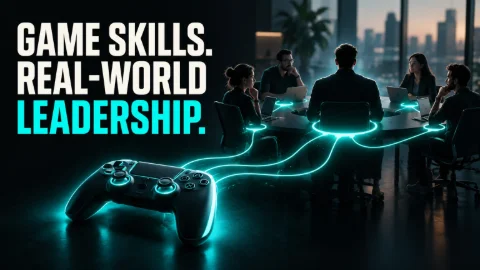
Game skills, real-world leadershipHow Gaming Leadership Applies to the Office

For years, the corporate world has treated gaming as a solitary escape—a hobby that stays neatly outside working hours. But anyone who has run an online guild, called the shots in a MOBA, or held a squad together on a competitive PvP server knows better: multiplayer games are a demanding place to practice leadership.

Leading a team in a game can take a surprising amount of emotional intelligence and planning. Your teammates are volunteers. Nobody is paid to show up, and anyone can log off.

That doesn’t make every raid leader a ready-made executive. But researchers and hiring managers have taken the overlap seriously for nearly two decades.

What the research says

In a 2008 Harvard Business Review article, Byron Reeves, Thomas Malone, and Tony O’Driscoll studied leaders in online role-playing games alongside gamers who had led real teams at IBM. They described game leadership as fast, comfortable with risk, and often temporary: people step up for one mission and step back for the next. [1]

Their most useful conclusion for managers was about the setting, not the person. Getting the leadership environment right, including visible performance and rewards beyond pay, can matter as much as choosing the right leader.

There are career examples, too. In 2006, Wired profiled Stephen Gillett, one of the top guild masters in World of Warcraft, and described that experience as a decisive edge when he joined Yahoo! as a senior engineering leader. [2] Two years later, Starbucks hired him as chief information officer. [3]

EVE Online: logistics at scale

The space MMO EVE Online is the clearest example of player-run organization. Players found corporations and band them together into alliances that hold territory, run industry, and negotiate with rivals.

The stakes can be large. In January 2014, a single missed sovereignty payment left a star system called B-R5RB open to attack. The fight that followed lasted 21 hours, drew more than 7,500 player characters, and destroyed 75 Titan-class ships—losses later estimated at US$300,000–330,000 in real-world value. [4]

Firepower alone didn’t decide it. The winning side blockaded neighboring systems to hold off reinforcements, used its intelligence network to learn that the other side had ordered a retreat, and kept fighting when one fleet commander had to run things alone because his co-commanders were at work.

A missed bill, a supply line, a chain of command that has to survive people’s day jobs: that is operations management, strategic planning, and large-scale logistics by another name.

Calling the shots: decisions under pressure

Consider the shotcaller in a fast-paced MOBA like League of Legends. Coordinating a five-person team in real time means making quick calls and managing performance as it happens.

A good captain plays to each role’s strengths, calls objectives under pressure, and steadies the team when a match starts slipping away—giving feedback without causing frustrated teammates to quit or “tilt.” That is project management and stakeholder alignment.

Research supports the soft-skill side. A team from MIT, Carnegie Mellon, and Riot Games found that a measure of a team’s collective intelligence predicted how well it performed in League of Legends, and related work ties collective intelligence to social perceptiveness: how well teammates read one another. [5]

Keeping a team focused under that pressure takes the same empathy and de-escalation that customer experience programs work hard to teach.

High-stakes survival: crisis management

Leadership isn’t only long-term planning; it’s also split-second judgment. In unforgiving survival games like DayZ or competitive tactical shooters, a squad leader constantly weighs risk against reward.

That means rationing scarce resources, keeping comms clear during chaos, delegating by individual strengths, and rebuilding morale after a devastating loss.

In the professional world, this translates to crisis management, agile problem-solving, and leading frontline teams, where clear, concise communication is the difference between a resolution and an escalation.

Translate the experience

The trick is translation. Hiring managers may not know what a “gank” or a “server wipe” is, but they understand performance management, coordination across time zones, and business continuity.

Be specific: how many people you led, how often, and what changed because of it. Framed that way, gaming stops sounding like a hobby and starts reading as a record of building communities and running operations from the ground up.

Contact

Information powers progress. Conversation is fuel.

Choose text or email. Both reach me directly.

New ticket